Low voltage at high load
Reduces high current draw, balances phases and boosts voltage when needed.
eqGrid helps grid operators and businesses with critical loads increase available capacity, stabilise voltage and reduce the need for grid reinforcement in weak distribution grids.
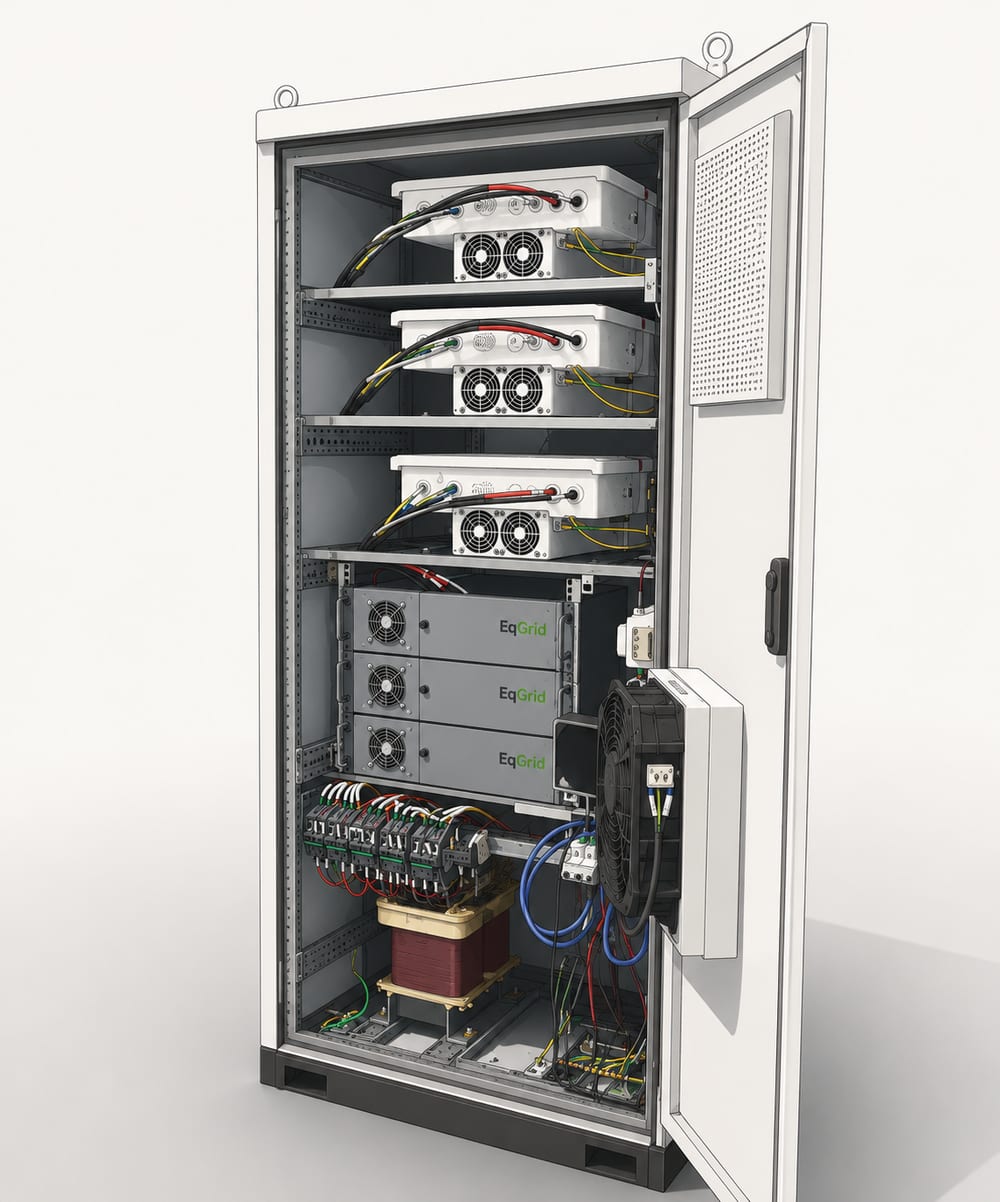
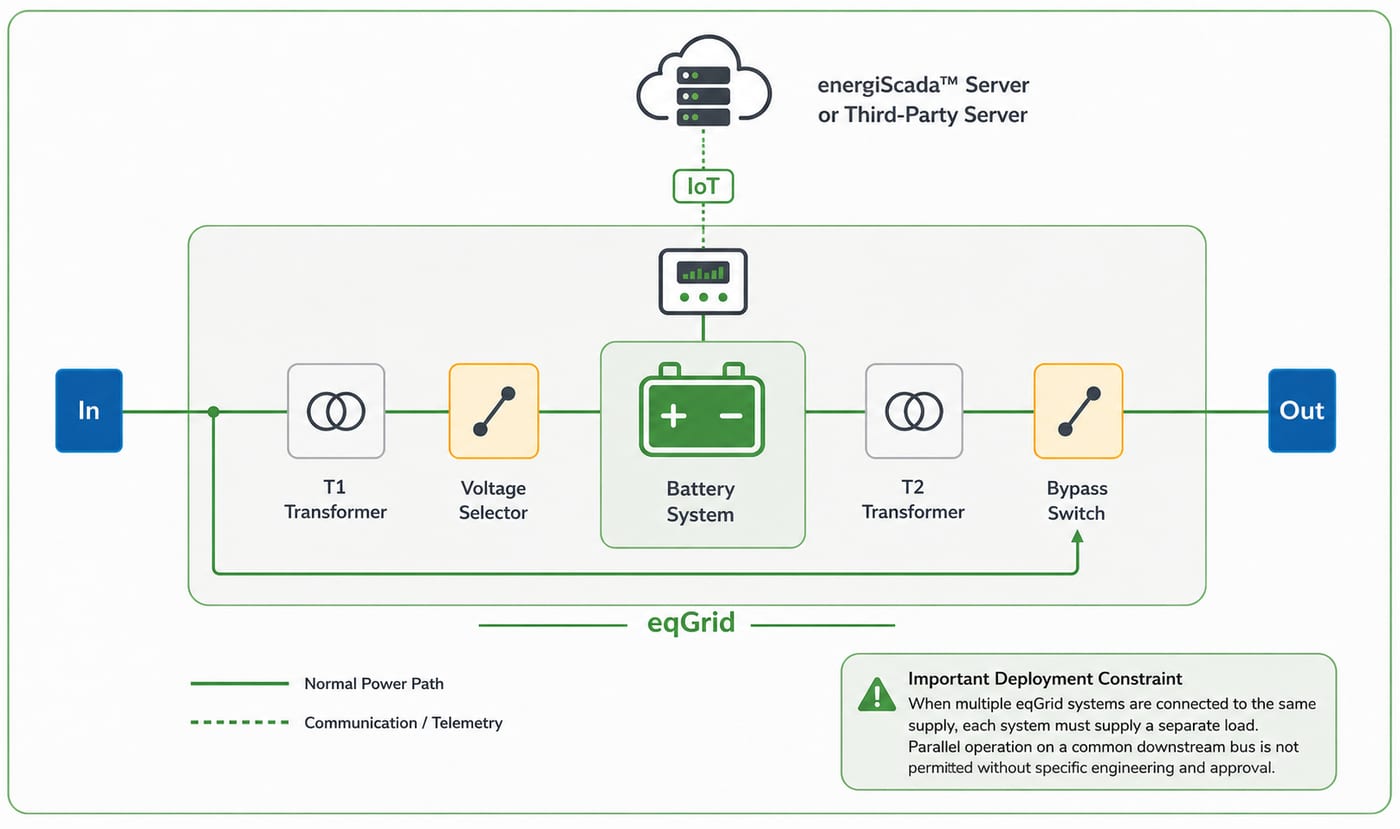
eqGrid combines a transformer, a patented no-break voltage selector, a battery system, bypass and local/central control.
When several eqGrid systems are connected to the same supply, each system must feed separate loads. Parallel operation onto a common downstream load requires engineering design and written approval.
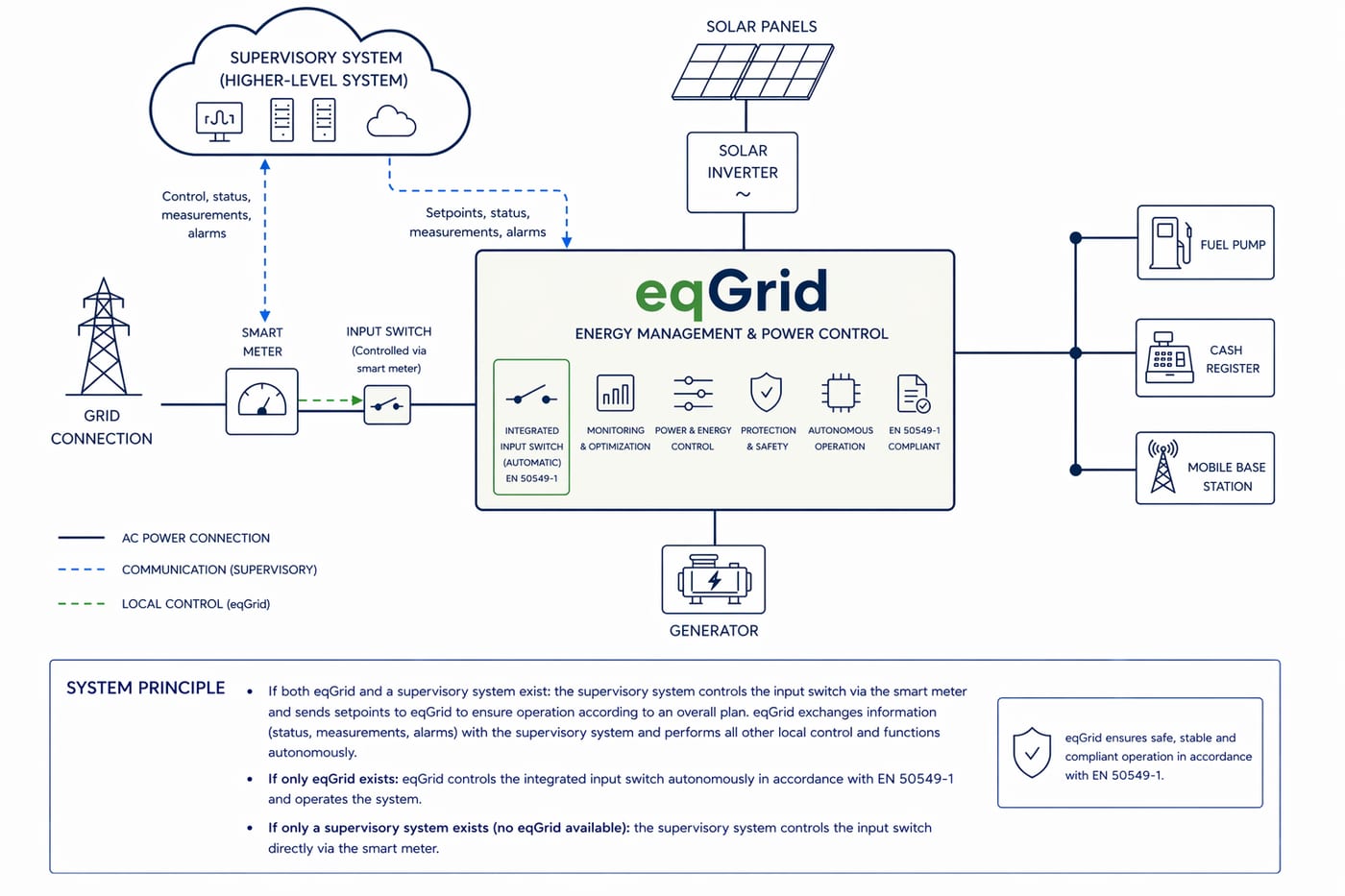
eqGrid can operate autonomously or together with a higher-level SCADA and energy management system. It supports local optimisation, protection and control of generator, battery, solar and critical loads.
energiScada™ can run locally or integrate with the grid operator's control system. The architecture is built for operational environments that demand robustness, autonomous operation and high availability.
eqGrid is designed for distribution grids where voltage quality and available capacity limit further electrification, local power generation or critical loads.
Reduces high current draw, balances phases and boosts voltage when needed.
Absorbs high generation by charging the battery, balances phases and trims voltage down when needed.
Injects current within 20 ms to compensate for rapid changes, reduce grid stress and avoid voltage steps.
Increases current draw on the phase with the highest voltage and reduces it on the phase with the lowest voltage.
Phase balancing and transformer tap changing can increase available capacity significantly.
The system acts as a UPS, limited by battery capacity, and can be supplemented with generator and solar for operation in island mode.
Can be connected even in weak, long radials, as eqGrid expands available capacity through phase balancing and transformer tap changing.
Enables more electrification in existing distribution grids without traditional grid reinforcement.
Keeps voltage variations, flicker and imbalance within limits without introducing new violations.
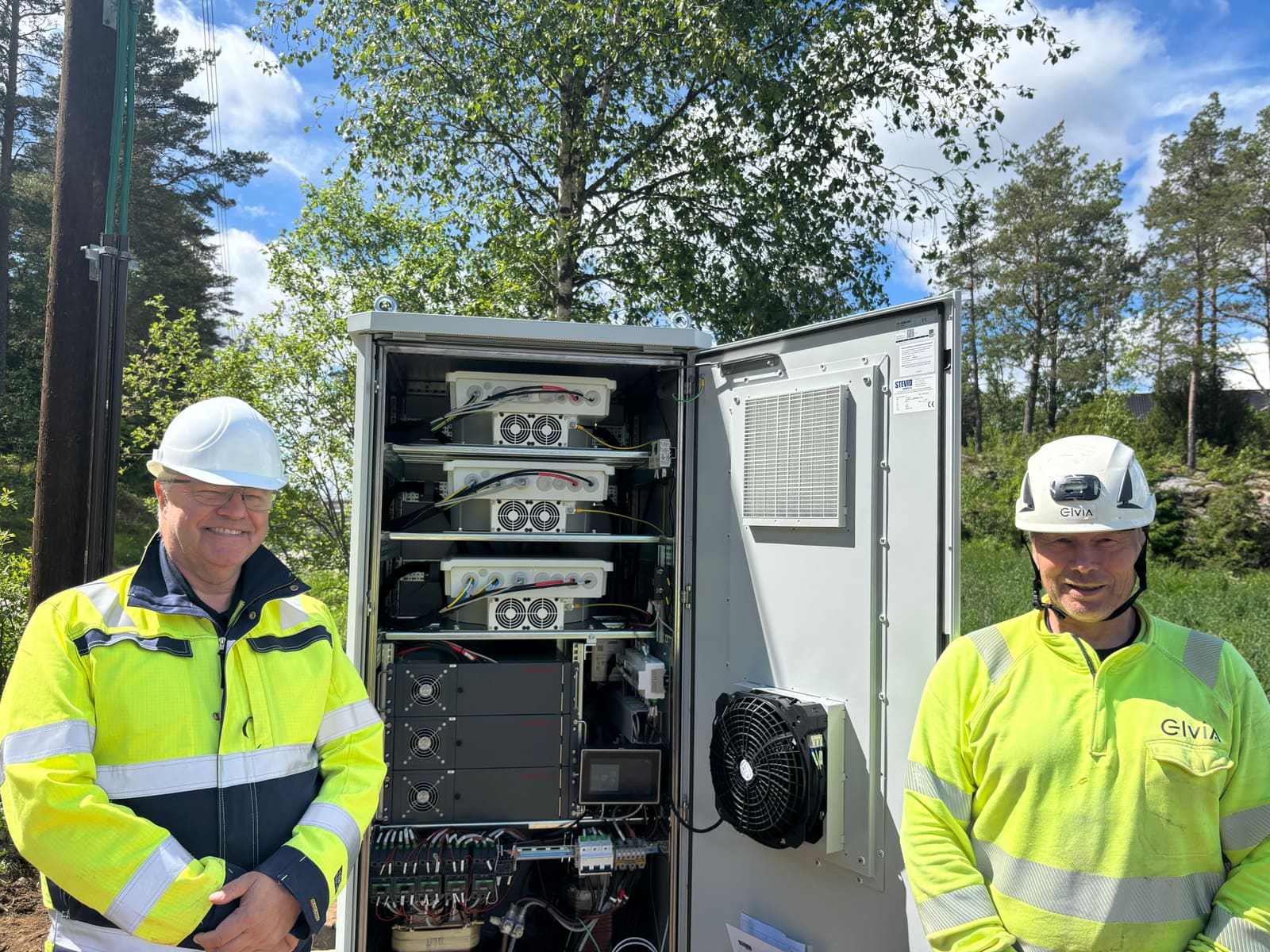
The installation in Elvia's distribution grid in Råde documents improved voltage quality in a demanding 230V IT network, and the unit was commissioned in 2.5 hours in the field.
Read more about the pilot project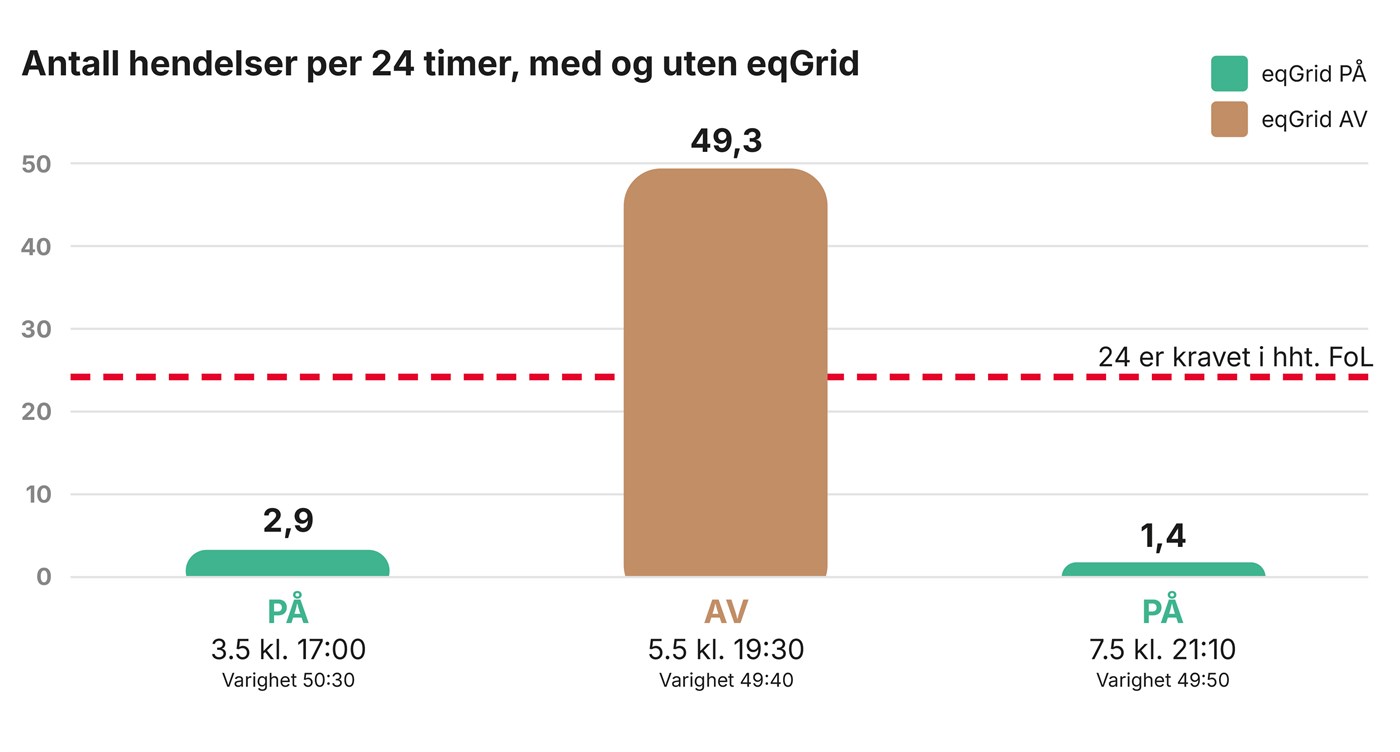
New measurement data from «eFlow and OLTC» show a 95% reduction in rapid voltage changes in Indre Østfold, and voltage unbalance in Råde brought from breaching FoL requirements to within them. Presented at the Smart Grid Conference on 15–16 September.
Read more about the field resultsIn weak grids, voltage quality is often the practical limit for further electrification. Early pilot measurements show a clear reduction in rapid voltage variations and improved balance.
Reduced from 50–100 per day to under 10 per day.
Voltage is brought within the 2% requirement.
The technology and background of eqGrid are linked to the Norwegian Smart Grid Centre's IDE programme, Elvia pilots, CIRED 2024 and the eFlow project covered in Europower.
Europower covers the eFlow project — the former name for eqGrid — as a trial of a new method for meeting voltage-quality requirements.
Europower Tester ny metode for å overholde kravene til spenningskvalitetThe OLTC and FBI pilots are documented in separate reports from the Smart Grid Centre's IDE programme.
Technology Read the full R&D and pilot historyThe work from the OLTC pilot was presented internationally at the CIRED Workshop 2024 in Vienna.
CIRED 2024 · Vienna Operation of on-load tap changer (OLTC) in MV/LV transformereqGrid is designed for environments where available capacity, voltage quality and operational continuity matter more than theoretical grid capacity alone.
Increases available capacity and improves voltage quality without full grid reinforcement.
Supports selected loads during outages or limited grid capacity.
Makes better use of existing supply for motors, machinery and local generation.
Reduces the need for shore power and cuts diesel use where the grid is weak.
Can form part of hybrid systems with grid, battery, solar and generator.
An operational measure for selected grid sections where reinforcement is slow or costly.
eqGrid is designed for grid sections where voltage level, rapid voltage changes, phase imbalance and flicker limit available capacity or affect critical loads.
In weak distribution grids, a customer's practical power draw can be limited by voltage drop, voltage steps, imbalance between phases and the requirements of EN50160 and the Norwegian Power Quality Regulations. eqGrid works locally to reduce these constraints before traditional grid reinforcement becomes necessary.
eqGrid builds on its own technology combined with robust components and collaboration with Norwegian grid operators and technology communities.

Partner in pilot and demonstration projects, including eFlow.

Supplier of power electronics and inverter technology for relevant system configurations.

Transformer supplier for the standard transformer architecture in eqGrid.

Switchboard builder in Vestfold that builds and integrates eqGrid systems ready for shipping and installation.

Transport and logistics partner that collects finished eqGrid units and delivers them to site and customer.
Vendor-independent consultancy in energy and technology. eqGrid builds on ten years of development here.

Incubator community in Halden. Supports eqGrid with market analysis and business development.
Technical overview of electrical characteristics, battery system, communication, operating modes and standards.
Technical documentation Open the product sheetThe story behind eqGrid: the IDE programme, OLTC, FBI, CIRED 2024 and eFlow.
Background Open the R&D background pageGet in touch for technical questions, pilot projects or assessment of weak grid sections.