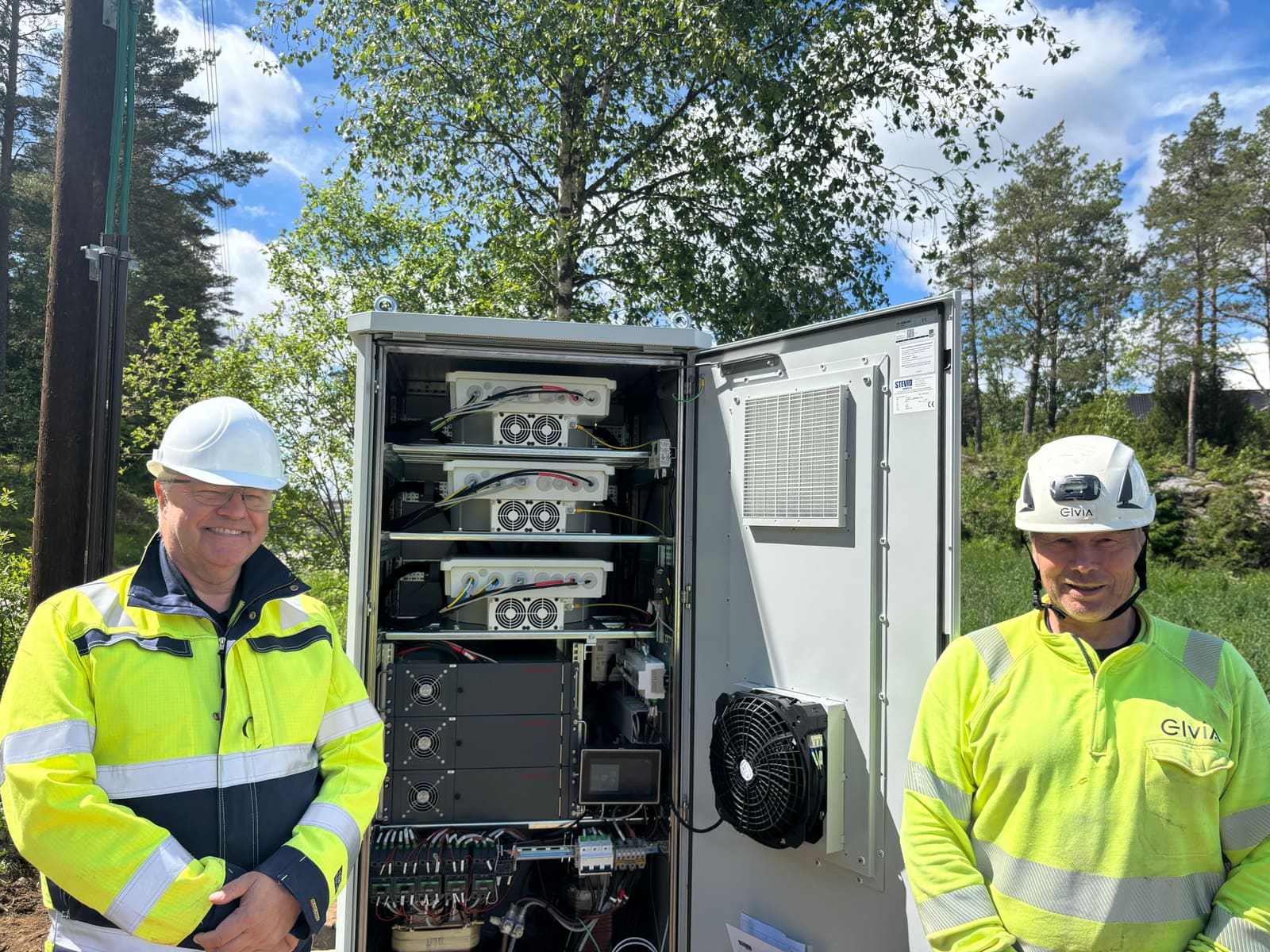
On-load tap changer («LV OLTC»)
An on-load (no-break) tap changer handles the slow voltage variations (§ 3-3) by adjusting the base voltage according to trends in the daily load. Tap changes typically occur a few times a day and relieve the battery.

Elvia is carrying out the project with support from Enova. Using eqGrid has already provided valuable measurement data on how power electronics and battery storage perform in practical grid operation. The results from the installation in Råde show that the eqGrid hybrid system — a compact «LV OLTC» unit combined with a battery system — delivers a documented improvement in voltage quality in demanding IT networks, and that the unit can be commissioned with minimal time in the field compared with traditional grid reinforcement.
A growing share of asymmetric loads and unregulated solar generation is putting voltage quality in the low-voltage grid under pressure.
More customers charge their EVs single-phase, and solar installations feed in power without regulation. Both make it harder to maintain good voltage quality in the low-voltage grid. As a result, grid operators increasingly experience voltage deviations, flicker and unbalanced phase voltages. This must be handled in line with the requirements of the Norwegian Power Quality Regulations (FoL). Traditional measures, such as replacing cables or building new transformer stations, require large investments and take a long time.
Elvia is therefore carrying out the «eFlow and OLTC» pilot project, with support from Enova through the «Flexibility in the energy system» programme. The goal is to find solutions that are more flexible and more cost-effective for society. The solution builds on ten years of development work at the technology company Energea — much of it in close collaboration with Elvia. Since it began in 2014, development has taken place in strategic and technical partnership with the Swiss power-electronics pioneer Studer Innotec.
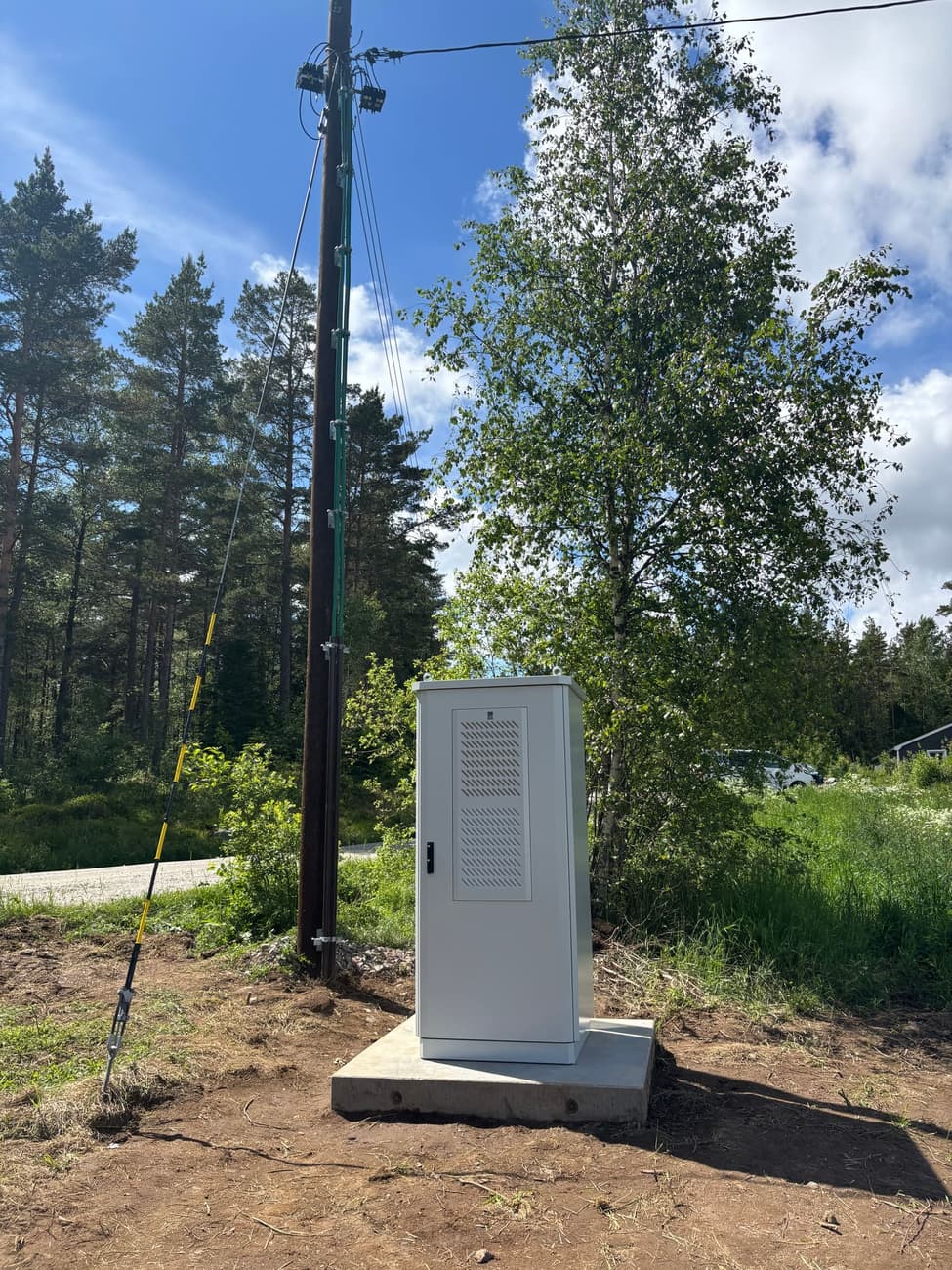
Elvia installed an eqGrid hybrid system in a weak grid segment in the municipality of Råde to test the solution in real operation. The grid is a 230V IT network — a topology common in Norway, but particularly vulnerable to voltage drop and phase imbalance in long radials with low short-circuit capacity.
The pilot demonstrated a streamlined process from production to full operation, led by Elvia's project manager Kjell Anders Tutvedt:
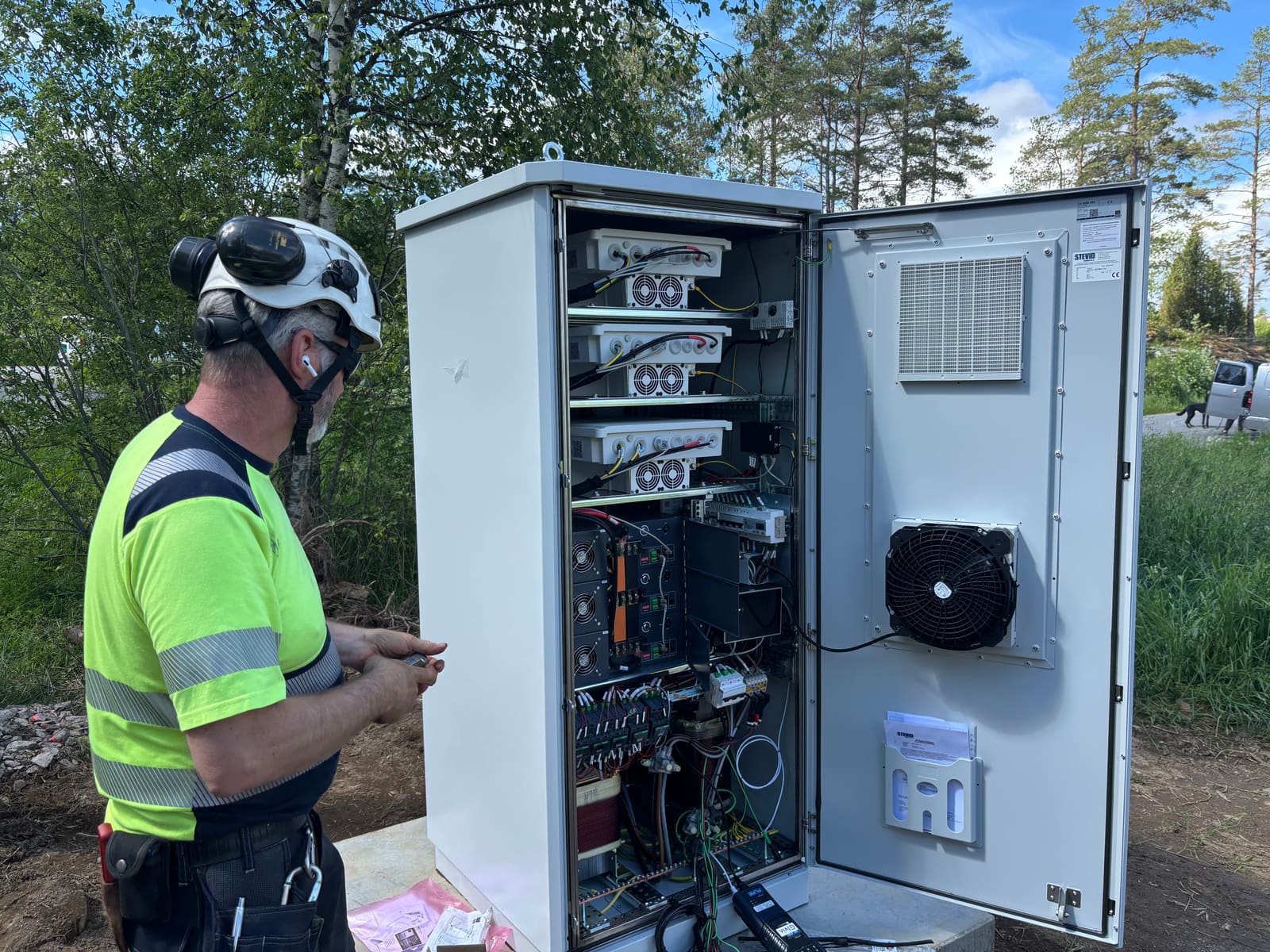
The system itself was built, configured and quality-tested in controlled conditions at the switchboard manufacturer Stevid Elektro. This minimised the risk of technical faults during assembly in the field.
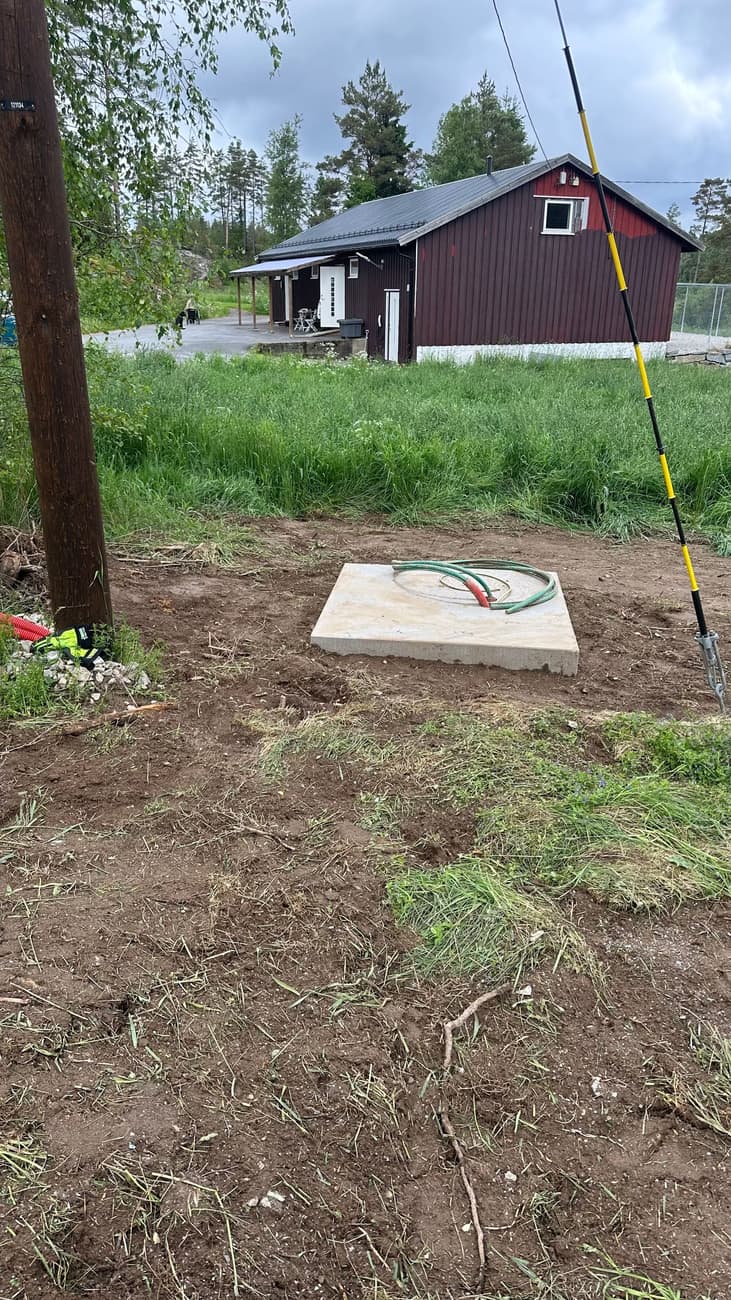
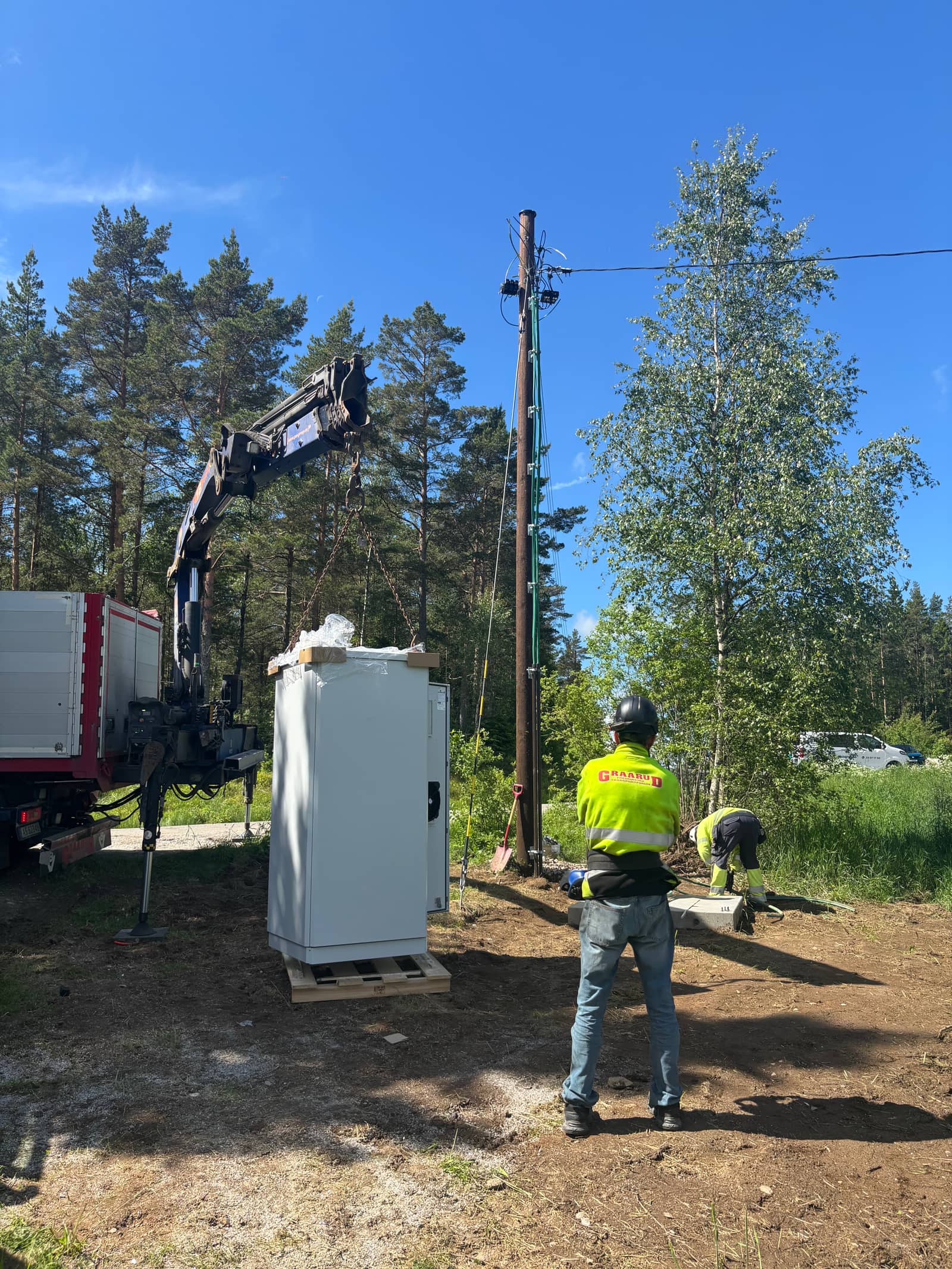
Before delivery, a local contractor prepared the installation site for Elvia. A short cable trench was dug for the connection to the pole, and local earthing was laid. A prefabricated concrete slab — with a cable feed-through and ready-made mounts for the cabinet — was then placed on a layer of compacted gravel.
SpedTrans transported the fully tested system to Råde, where Elvia's fault engineer Tommy Olsen and Jan Holth were ready and waiting for installation. The crane truck lifted the module into place on the concrete slab, and the cables were connected.
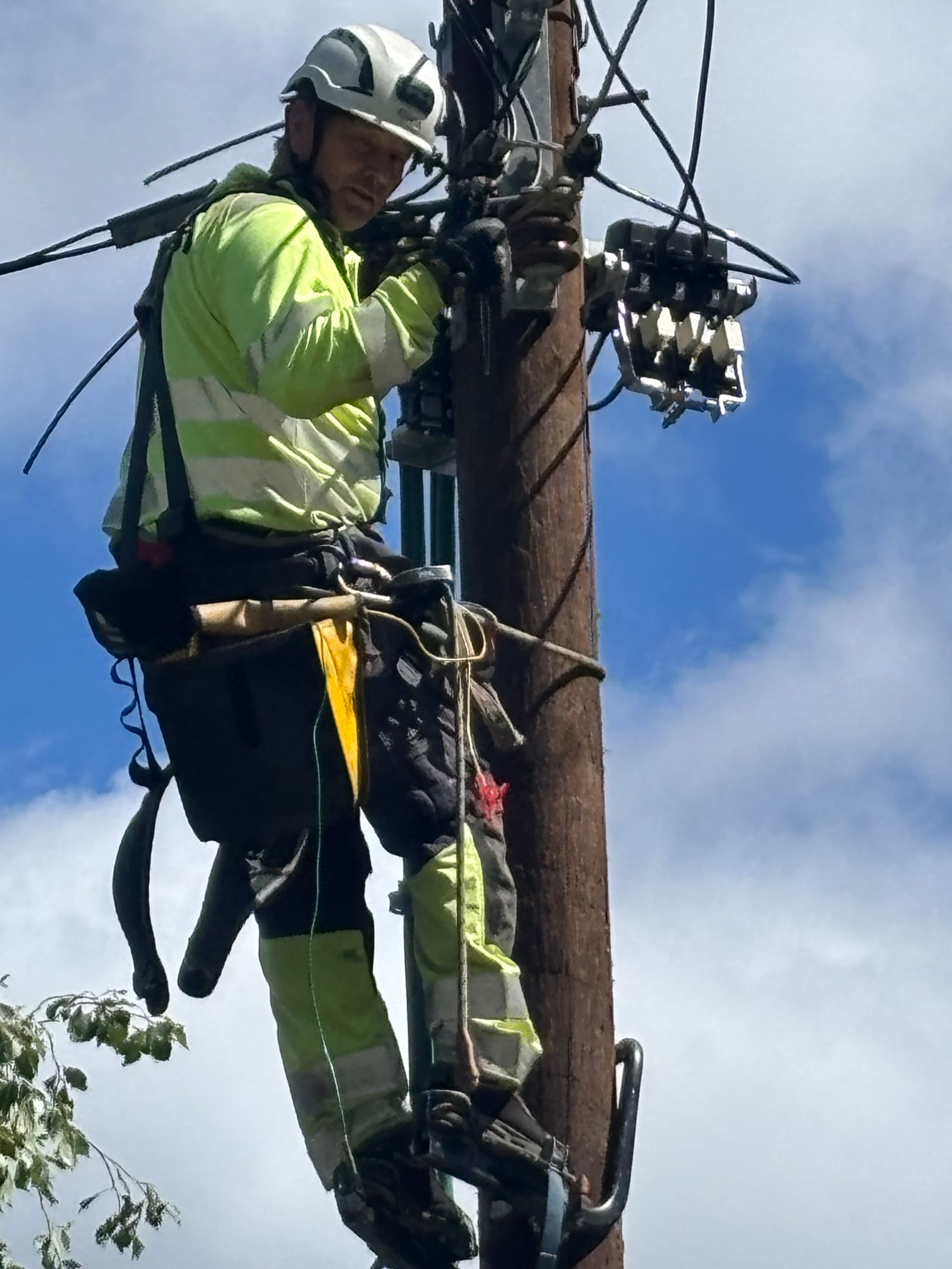
The system Elvia commissioned in Råde uses advanced power electronics and inverter technology from Studer Innotec. At the core of the solution are two regulating mechanisms that work together.
An on-load (no-break) tap changer handles the slow voltage variations (§ 3-3) by adjusting the base voltage according to trends in the daily load. Tap changes typically occur a few times a day and relieve the battery.
The control system monitors the installation and gives users access to real-time analysis and visualisation. Its main function is to control the tap changer and the power-electronics parameters so that the system improves voltage quality as effectively as possible.
The fast-acting battery system smooths out voltage changes by injecting or absorbing current. This happens almost instantaneously, and fast enough to dampen rapid voltage variations (§ 3-4) and flicker (§ 3-5).
The Råde pilot examined in particular how well the system evens out unbalanced load between the phases (voltage unbalance, § 3-6). In an IT network, unbalanced load causes significant voltage losses and shifts the neutral point. This increases technical losses (I²R) and reduces how much power the grid can carry.
Studer Innotec's power electronics shift active power between the phases in real time, so the load is distributed evenly. Measurements from Elvia's grid confirm that this reduces the peak current in the most heavily loaded phase. The result is less strain on the upstream transformer station and freed-up capacity in the existing cable network — with little need for the battery.
Magnetic voltage boosters are a common option for voltage support in distribution grids. The challenge is that they regulate by means of magnetic saturation, which creates non-linear currents. This can introduce harmonic voltages and increase total harmonic distortion (THD) — something that is strictly regulated under FoL § 3-7.
The experience from Råde and the «eFlow and OLTC» project shows that on-load tap changing combined with fast-acting power electronics meets the FoL power-quality requirements, even in challenging IT networks.
Together with Energea and Studer Innotec, Elvia has developed an effective tool for dynamic voltage support and phase balancing over many years of collaboration. The short installation time and the minimal impact on the terrain in Råde demonstrate the result in practice. The technology gives grid operators the option to defer or replace traditional, time-consuming grid investments in areas with capacity constraints.