Field results from Elvia's pilot project: 95% reduction in rapid voltage changes
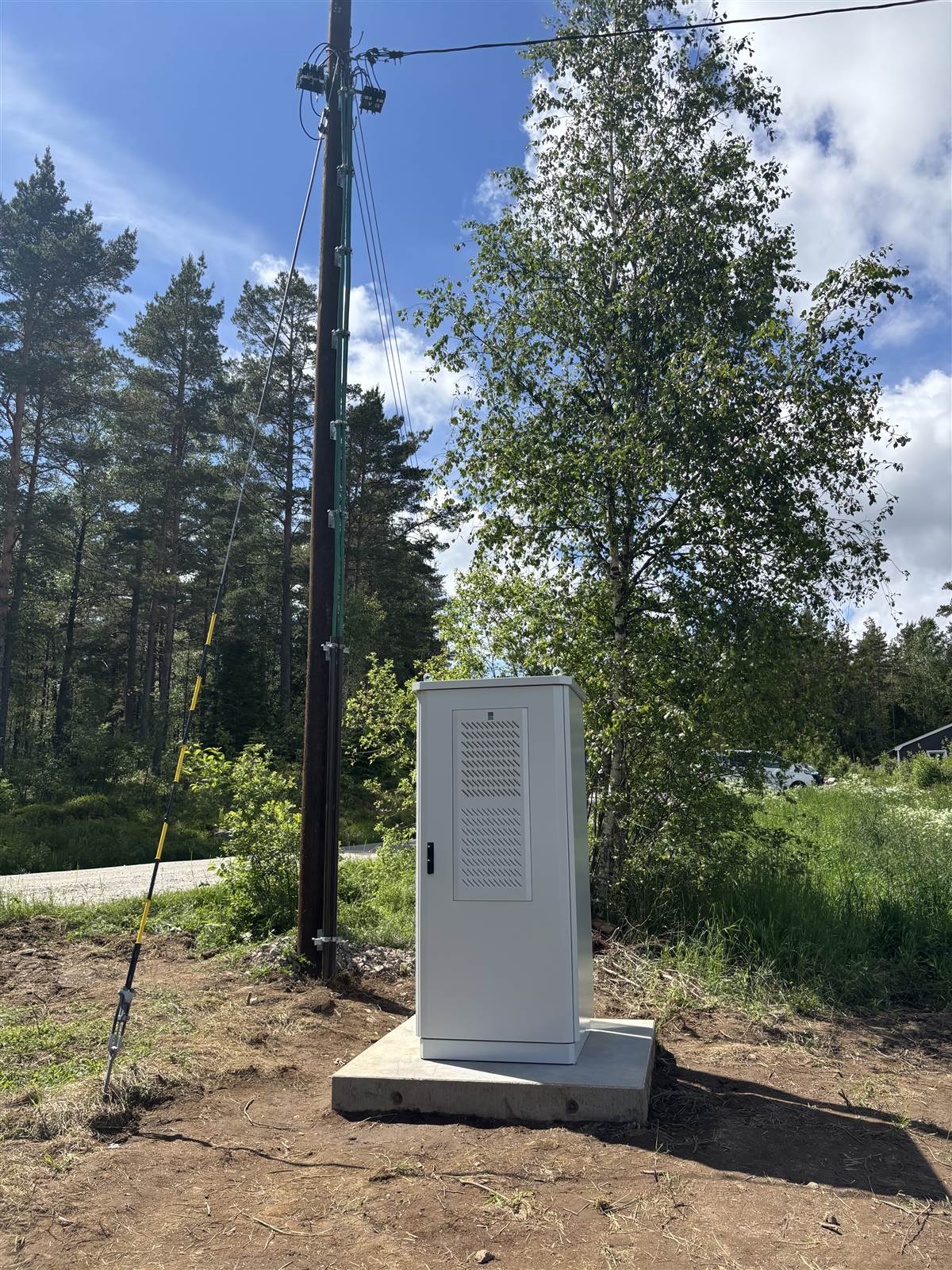
Elvia is developing and testing the eqGrid solution, together with project partner Energea, in the «eFlow and OLTC» pilot project, funded by Enova through the «Flexibility in the energy system» programme. The goals include increasing available hosting capacity in weak distribution grids, avoiding excessively high and low voltages, and minimising voltage unbalance.
Elvia's goals for the project
- Increase available hosting capacity in weak distribution grids
- Avoid excessively high voltages from local generation
- Avoid excessively low voltages during high consumption
- Minimise voltage unbalance
- Reduce, and avoid introducing, harmonic disturbances
- Enable integration with Elvia's operational tools
- Provide a basis for practical and economic planning rules for choosing measures
The pilots
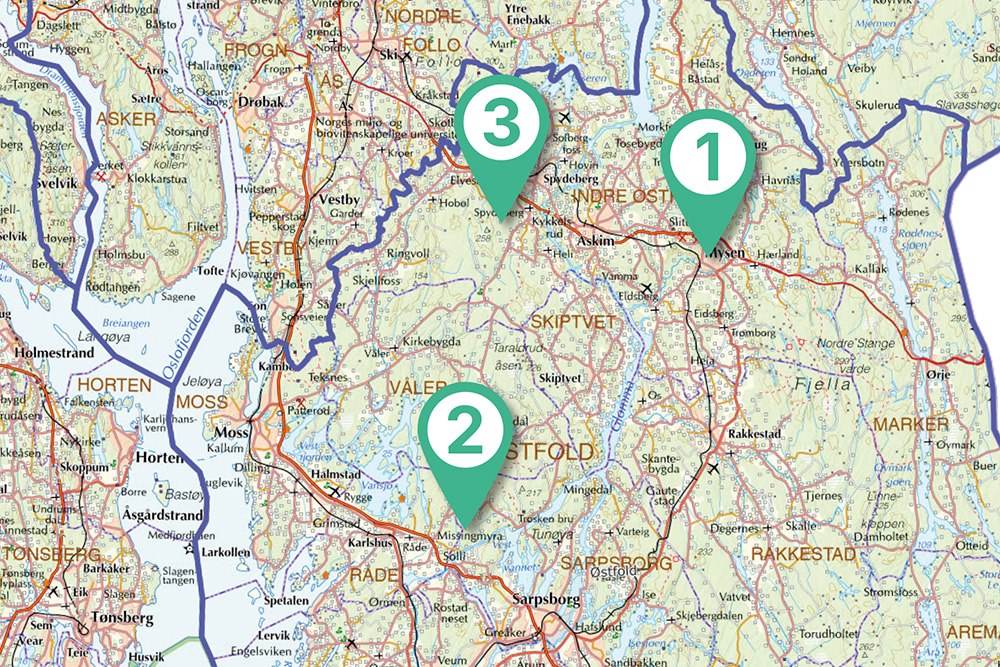
eqGrid is designed for locations where voltage quality limits how much of the distribution grid's capacity can be utilised. Elvia's project plans for four pilots, where pilots 1 and 2 have been established in the municipalities of Indre Østfold and Råde, while the third will be established in the municipality of Spydeberg.
These three pilots have high generation and high consumption relative to what the grid can withstand (short-circuit capacity). The fourth pilot has not been decided, but the plan is to demonstrate increased capacity in a 230V distribution grid.
Rapid voltage changes
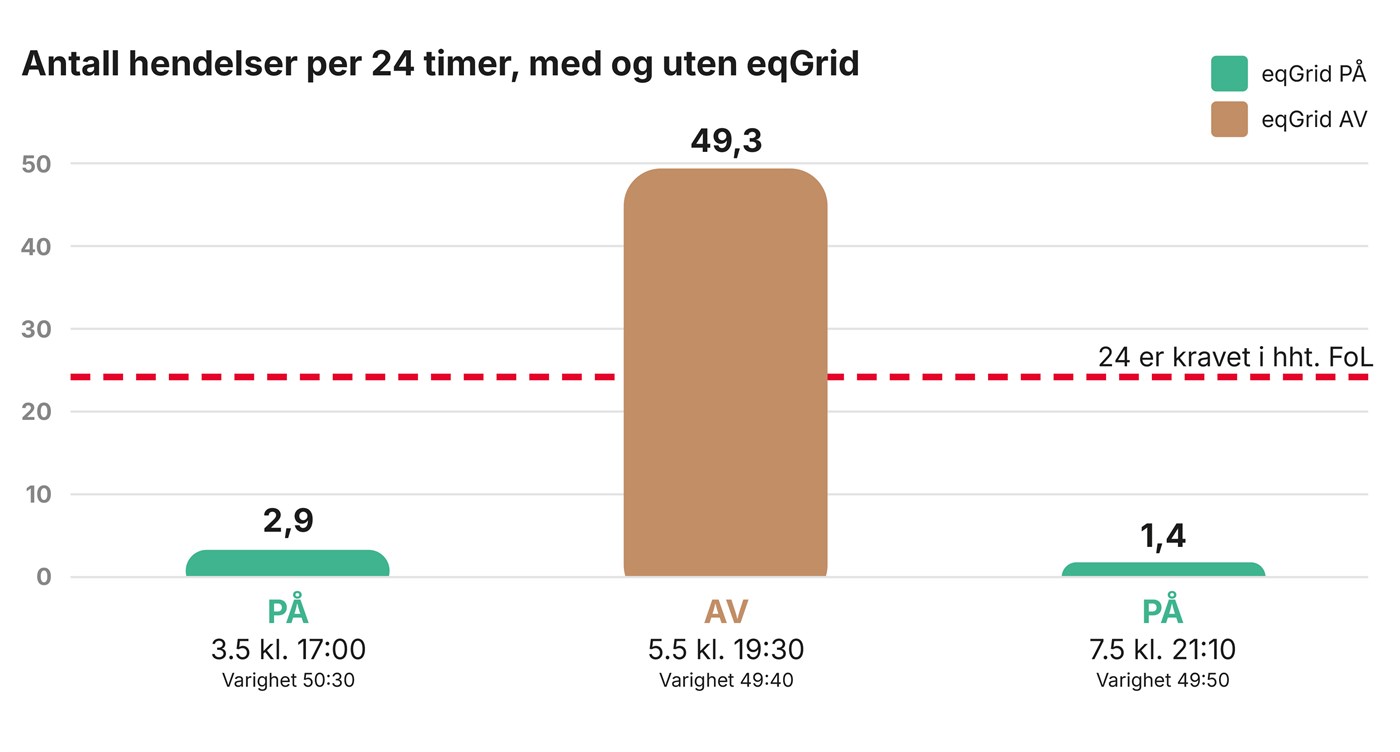
The results from the Indre Østfold pilot show a sharp reduction in rapid voltage changes. On the two days eqGrid was switched off, there were 49.3 events per day. In the equivalent periods before and after, there were 2.9 and 1.4 such events respectively — well within the FoL requirement of a maximum of 24 events per day.

Voltage unbalance
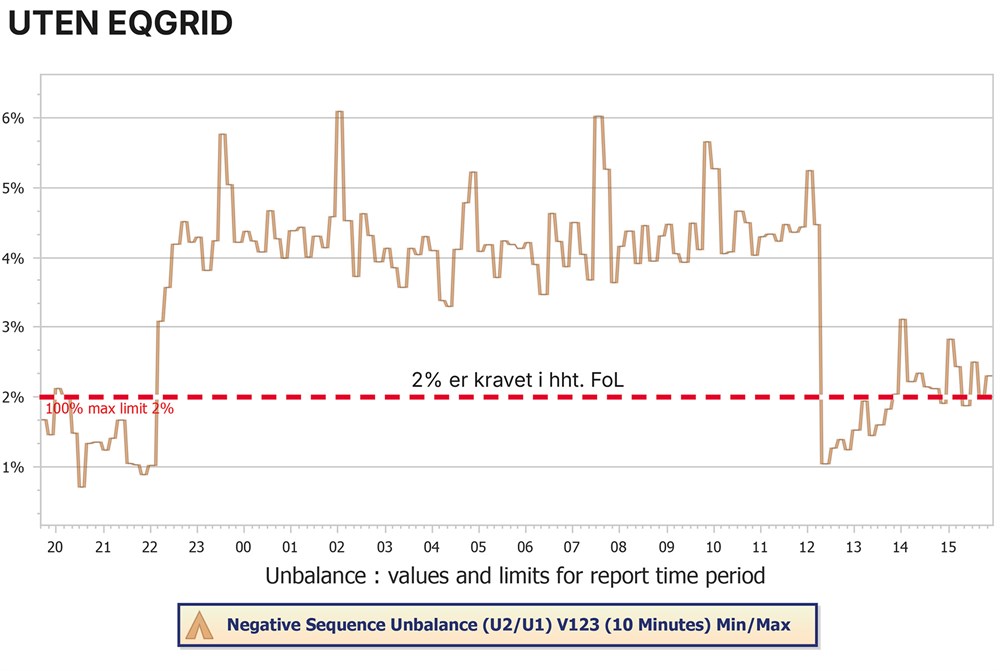
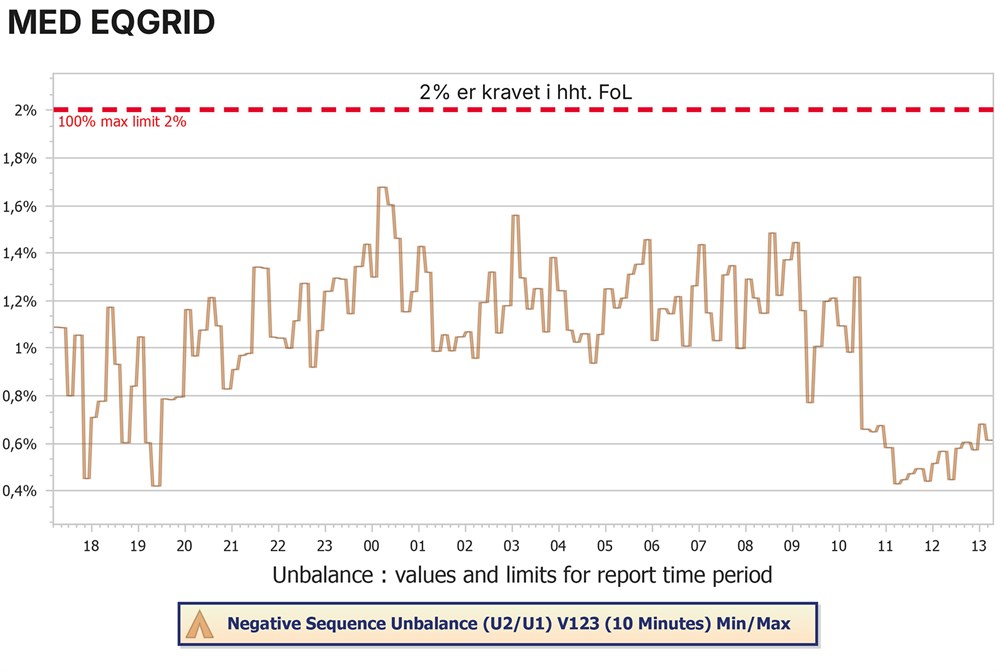
In the Råde pilot, voltage unbalance before mitigation averaged around 4%, with peaks above 6% — well above the FoL requirement of 2%. The measurements were taken under comparable conditions, with EV charging occurring for most of the period.
The innovation
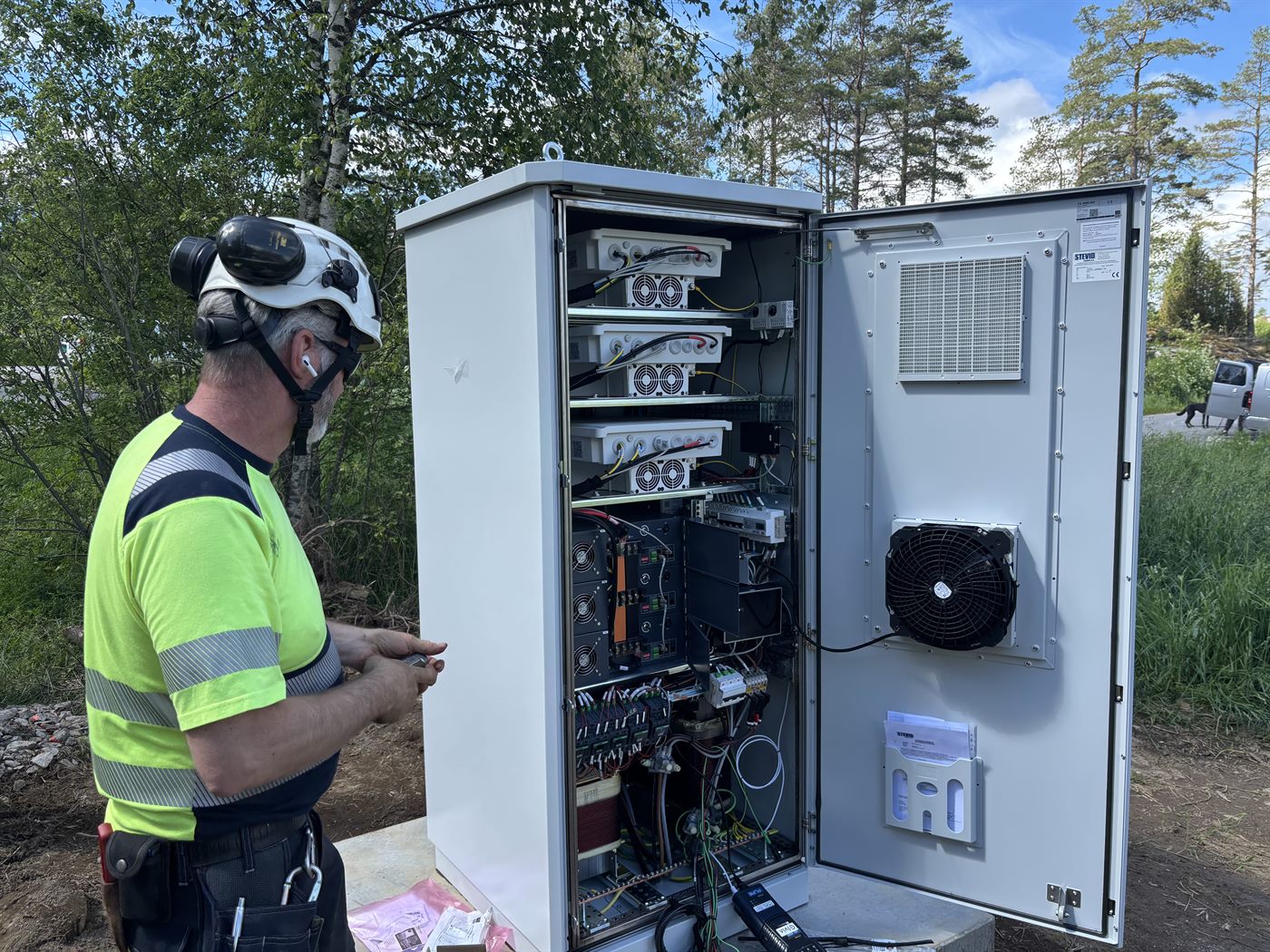
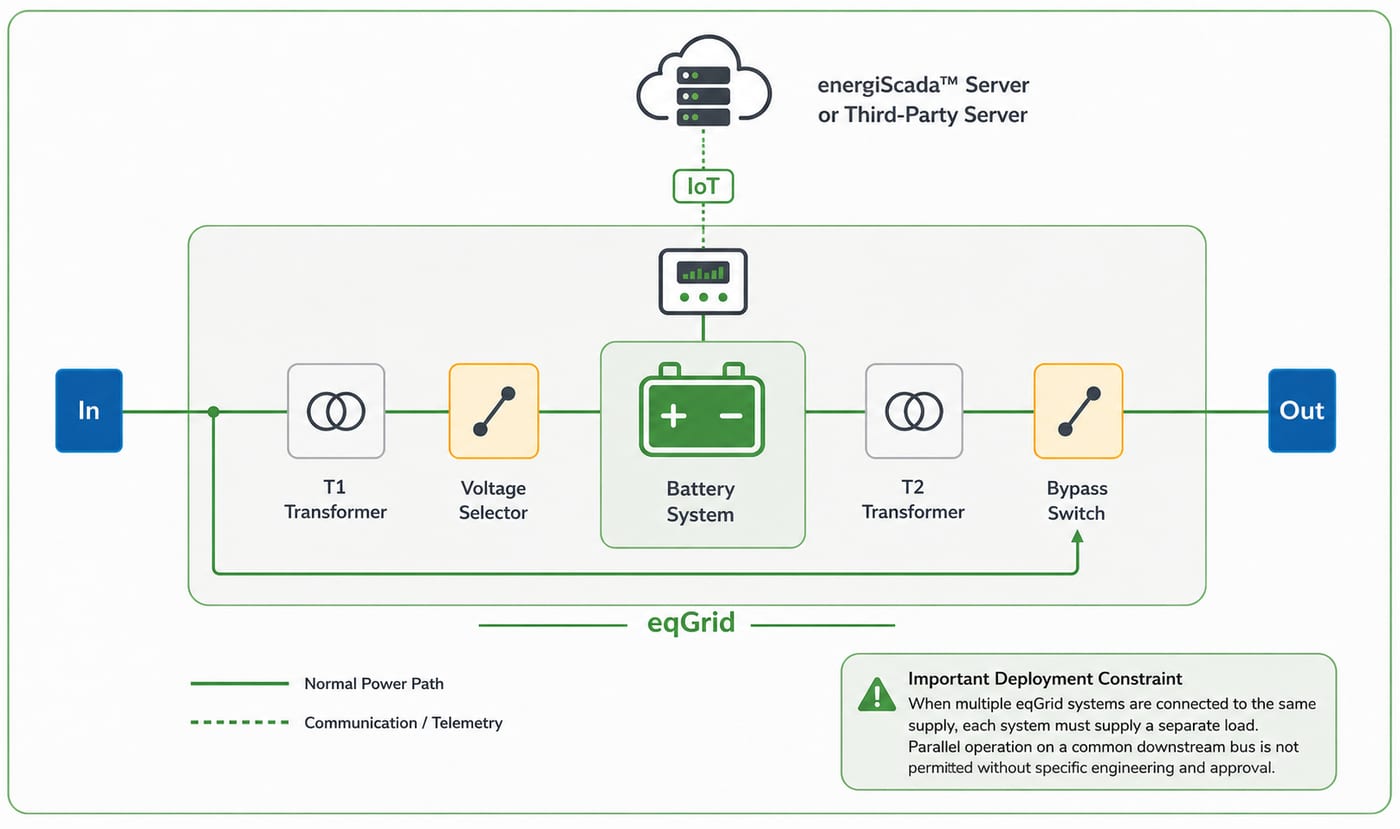
The project is testing the eqGrid system, a hybrid solution with several functions in one grid component. The system consists of an isolation transformer with several voltage levels and a patented on-load (no-break) tap changer that makes it possible to handle long-duration voltage variations with little load on the battery.
The system also has a battery and power electronics that handle rapid voltage changes and shift power between the phases. Local energiScada control monitors the system and regulates eqGrid autonomously.
Further work
From reactive to predictive control
Today's local control reacts directly to measured conditions in the grid. The next development step is to predict the need before a voltage problem occurs, by combining weather data, solar elevation, installed PV capacity and historical consumption to estimate upcoming generation and load.
From pilot to grid tool
The goal is not necessarily to replace traditional grid reinforcement, but to give grid companies a relocatable alternative that can defer permanent investments and later be moved to other parts of the grid — and form the basis for future industry rules within REN.
About the project
- Project owner
- Elvia AS
- Project partner
- Energea AS
- Technology
- eqGrid
- Project period
- 2025–2027
- Funding
- Enova – Flexibility in the energy system
Presented at the Smart Grid Conference
The field results were presented as a poster at the Smart Grid Conference on 15–16 September 2026 in Halden, hosted by the Norwegian Smartgrid Centre (Smart Innovation Norway) and Fornybar Norge (Renewable Norway).
Want to hear how eqGrid can improve voltage quality in your grid?